1.2 A Brief Historical Outline of the Creation of the Orenburg Municipal Public Bank
Considering the difficulties involved in moving to new forms of credit institutions, the Orenburg authorities and representatives of the townspeople did not hurry to open a bank. In fact, its establishment took place with more than a half-century delay after the appearance of the first municipal public banks in Russia. The decree establishing the Orenburg municipal public bank did not directly formulate the purposes of its creation. For this reason, the activity of the Orenburg bank must be examined through the economic circumstances of the city, the position of local self-government and the practical motives that led to the creation of the institution.
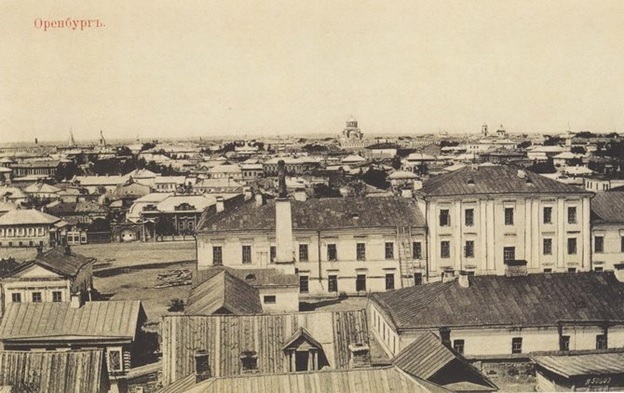
To understand the cautious attitude of the Orenburg authorities, it is important to take into account that in the second half of the nineteenth century the advantages of opening a bank in the province were not always obvious. The city was a provincial trade and industrial centre of modest scale. The trade of the Orenburg province was divided into external and internal trade, but the former was gradually losing its former importance.
External trade was conducted with Bukhara, Khiva and other Central Asian territories. Within the province there were the Orenburg and Troitsk customs offices and two customs posts. Through Orenburg, manufactured goods were mainly exported, while raw materials and livestock were imported. Manufactured goods arrived from the inner provinces, especially from Moscow and Vladimir, and the region exported wool, hides, livestock, raw materials and goods linked to caravan trade.
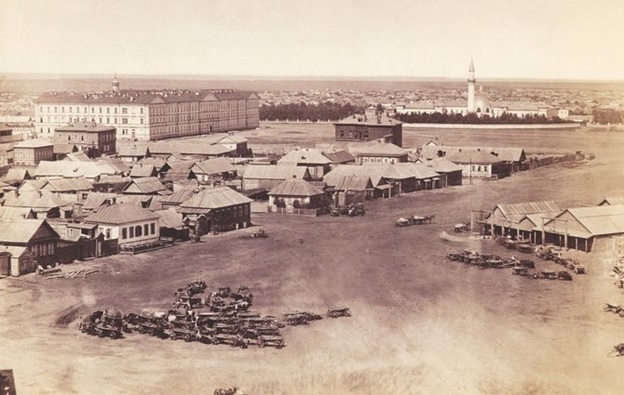
The “Chronicle of the City of Orenburg for 1864” described the state of internal trade in a short and harsh formula: there was no internal trade in the city. It had been replaced by large and small-scale petty trading in the absence of developed industry and crafts. The population of Orenburg at that time consisted of 18,046 males and 15,385 females. The city had administrative and military significance, but its own economic base remained limited.
Contemporary statistical publications noted that industry in the region, apart from mining and factory production, was poorly developed. At the same time, Orenburg possessed the conditions for the development of manufactures, factories and plants: there were fuel resources, raw materials, wool, opportunities for textile production and a location connected with Asian trade routes. Yet a shortage of capital, the orientation of available funds toward gold mining and foreign trade, insufficient enterprise and the lack of trained workers forced the province to send its raw materials to other provinces for processing and receive them back in finished form.
The public banks already established in Troitsk and Chelyabinsk could do little to support the turnover of internal trade and urban industry, since their capital was very small. In these unfavourable conditions, in 1862, on the initiative of the Orenburg City Duma and the merchant community, preparatory work began to open a municipal public bank in Orenburg.
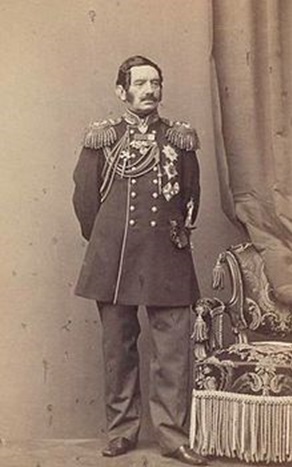
The formation of the bank’s capital immediately became the central issue. Governor-General Alexander P. Bezak considered several possible sources of capital: a short-term loan from the State Bank; funds from the Orenburg Board of Public Charity; and the city reserve capital. The discussion showed that the city sought to create a bank, but wanted to preserve control over the capital and avoid excessive dependence on external charitable or administrative funds.
The Orenburg city community agreed to establish a municipal public bank by transferring 50,000 rubles from the city reserve capital into the main capital of the bank. The remaining funds were to be placed in the bank as a fixed-term deposit, and the bank could use them only with prior agreement between the bank and the City Duma. This decision demonstrated that the bank was conceived not as a private enterprise, but as an institution connected with the municipal economy and controlled by the city.
At the same time, despite the border position of Orenburg, the issue of representation of Central Asian peoples in the bank was resolved with difficulty. In September 1863, the administration of the Orenburg and Samara Governor-General reported to the City Duma that the provincial authorities had considered the request of the Orenburg community to establish a public city bank. The city community found it inconvenient to admit caravan-bashi of the Bukhara, Khiva and Kokand khanates, as well as deputies from the Kyrgyz, as members of the bank.
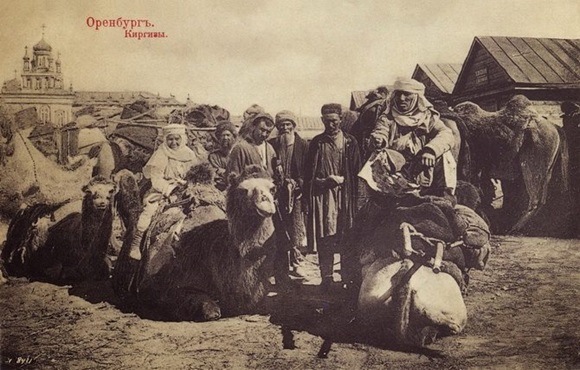
The motives of the authorities were connected with the importance of caravan trade. Caravans played a major role in Russia’s external trade with Central Asia. They moved between Khiva and Orenburg, were led by Kyrgyz, Turkmen, Karakalpaks and Kyrgyz-Kaisaks, and were exposed to robbery and commercial risks. The proposal to include representatives of caravan trade in the bank’s administration was therefore linked to the strategic position of Orenburg as a gateway to Asian trade.

The Governor-General drew the attention of the Duma to two circumstances. First, Orenburg was far from the main markets and lacked fast and convenient communications; this slowed the turnover of capital and made the reliability of the bank’s capital a necessary condition for its activity. Second, under the rules on municipal banks, loans could be secured by goods of Russian production intended for wholesale sale abroad or inside the empire, but Orenburg’s trade significance was largely based on exchange with Central Asian goods. Restricting the bank to Russian goods alone would sharply reduce the usefulness of the institution.
After considering the position of the city community, Governor-General Bezak proposed that the Orenburg City Duma take his opinion into account and submit a new decision. A positive resolution made it possible, by the end of June 1864, to receive notice that the Minister of Finance had reported to the Governing Senate on permission to open a public bank in Orenburg under the conditions approved by the ministry on the basis of the Imperial Decree of 17 June 1864.
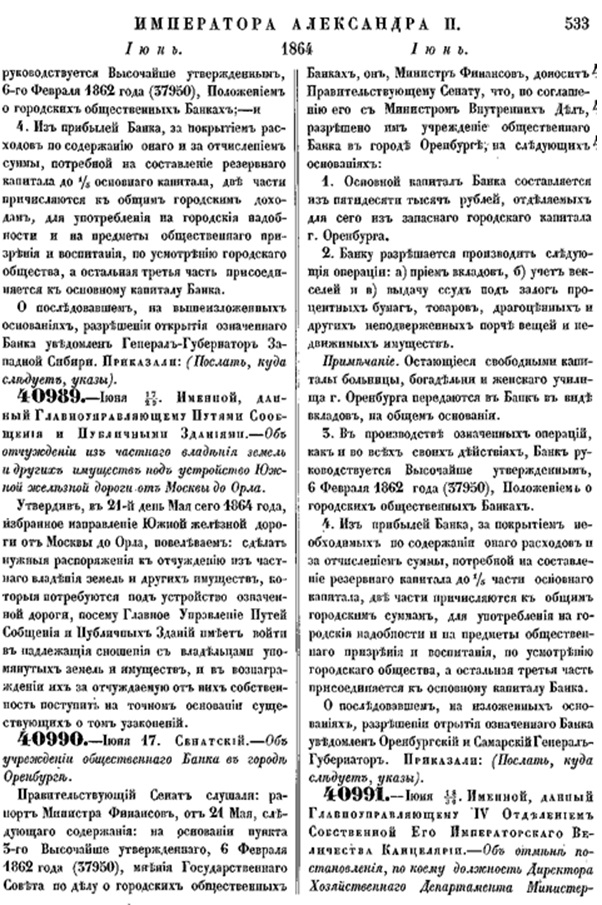
Because the opening of the fair was approaching and trade needed support, the Governor-General ordered the immediate election of the director and his assistants, the opening of bank premises and the preparation of the institution for activity. The right to issue loans secured by Asian goods was to be regulated by a special order. At the elections held in the City Duma, the merchant Nikolai Andreevich Dyukov was elected director, and Yakov Stepanovich Truev and Ivan Gavrilovich Krivtsov were elected as his assistants.
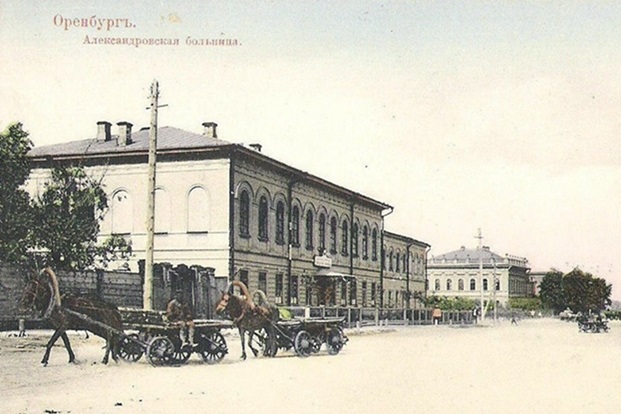
Initially, the capital of the Orenburg bank was expected to include funds of the almshouse and the women’s school. These funds were later considered inconvenient because they created compensatory obligations and dependence on the Orenburg Board of Public Charity. The City Duma therefore recognized that the main capital of the bank, amounting to 50,000 rubles, should be increased by adding the capital of the almshouse, hospital and women’s school, while the bank would accept Russian-manufactured goods as collateral in accordance with the rules on municipal public banks.
The bank was opened under the following basic conditions:
- the main capital of the bank amounted to 50,000 rubles from the city reserve capital;
- the bank was permitted to accept deposits, discount bills of exchange and issue loans secured by interest-bearing securities, goods, valuables, other non-perishable objects and real estate;
- free funds of the hospital, almshouse and women’s school of Orenburg were to be transferred to the bank as deposits on general terms;
- after covering necessary expenses, part of the profit was to be allocated to reserve capital;
- two parts of the profit were to be credited to general city funds for municipal needs, public charity and education, while the remaining third was to be added to the main capital.
The special location of Orenburg led to a proposal to supplement the standard charter of such banks by allowing caravan-bashi of Bukhara, Khiva and Kokand, as well as a deputy from the Kyrgyz, to become members of the bank. This provision caused a strong debate. The city community argued that the emperor had granted the local society the right to form and manage the bank’s capital through persons elected by that society. It therefore seemed unjust to place half of the bank’s administration in the hands of people who had not participated in creating its capital and were subjects of other states.
The city community effectively did not support the imperial policy of drawing the Kokand Khanate and the Bukhara Emirate into Russia’s economic orbit through protectorate relations. It is necessary to remember that in the 1850s–1870s the Kokand campaigns were conducted to strengthen the southern borders of the Russian Empire, protect trade interests and secure routes to Central and South Asia. In 1864 the Orenburg military detachment participated in the Russo-Kokand War and captured the city of Turkestan.
In the end, the Orenburg City Duma managed to defend its position. The caravan-bashi of Bukhara, Khiva and Kokand, and the deputy from the Kyrgyz, did not enter the bank’s board. At the same time, the bank was instructed to accept deposits not only from Orenburg residents, but also from subjects of Central Asian possessions and from the Kyrgyz, and to issue loans secured not only by Russian goods insured against fire, but also by goods from Central Asian territories.
The creation of the Orenburg bank shows that the decision to open it, its goals and its range of transactions were determined by the local Duma and government officials on the basis of the interests of the municipal economy and using public funds. No economically active group capable of initiating a private bank emerged among the townspeople. In essence, the creation of the Orenburg bank corresponded to the all-Russian tendency to create quasi-state credit institutions in response to weak private initiative.
The bank was established in the interests of the city, under a standard charter, and received permission to carry out standard transactions: accepting deposits, discounting bills of exchange and issuing loans secured by interest-bearing securities, goods, valuables, other non-perishable objects and real estate. This example was typical of many regions of the period, where state initiatives played the main role in developing financial infrastructure and stimulating economic growth.
Although government permission to open the municipal public bank was obtained in June 1864, the start of its activity was delayed until November. The delay was caused by the absence of required book forms and by the fact that the city reserve capital had not yet been received from the Board of Public Charity. Contemporaries spoke of this initial period sarcastically, noting that the creation of a public bank with a capital of 100,000 rubles was added to the misfortunes that had affected Orenburg’s foreign trade.
In November 1864 the bank began its activity. On the twelfth day of that month, it petitioned the City Duma to approve the acceptance as collateral of molasses, black and red leather, rendered beef and mutton fat, camel wool and other goods. The bank also asked the Duma to appraise silver objects pledged by a sotnik of the Orenburg Cossack Host. By 14 July 1866 the staff of the Orenburg municipal bank included an accountant, senior and junior assistants, a watchman and a messenger.
One of the earliest documents of the bank was the statement of sums under its administration as of 1 December 1864.
Table 1 — Statement of sums under the bank’s administration and other documents as of 1 December 1864
| Items | In silver | |
|---|---|---|
| Rub. | Kop. | |
| Statutory capital of 50,000 rubles and fixed-term funds from city revenues of 29,800 | 79 800 | |
| Interest newly accrued | 3 799 | 52 |
| Total | 83 599 | 52 |
| Total issued as loans | 59 132 | 28 |
| Bank maintenance expenses | 265 | 20 |
| Total | 59 397 | 48 |
| Capital | 20 667 | 72 |
| % | 3 534 | 32 |
| Total | 24 202 | 4 |
| Bills of exchange for | 58 623 | 53 |
| in interest-bearing securities | 450 | |
| valuables | 58 | 75 |
| Total | 59 132 | 28 |
Source: File on the organization of the public bank in Orenburg. State Budgetary Institution “Consolidated State Archive of the Orenburg Region” (GBU “OGAOO”). Fonds 41. Inventory 1. File 1120.
The report for the first reporting year, 1865, has unfortunately not been preserved. The archive contains only the statement of sums and other documents under the bank’s administration for June 1866. In essence, this is one of the earliest monthly reports of the bank that has survived.
Table 2 — Statement of sums and other documents under the bank’s administration, June 1866
| Principal remaining from April: | Rubles |
|---|---|
| Reserve capital in silver | 3 064,80 |
| cash | 35,2 |
| Total | 3 100,00 |
| Main capital | 6 100,58,5 |
| Interest on hand | 4 863,50,5 |
| Total | 8 574,90 |
| Bills of exchange for 160,315 rub. 5 kop.; precious metals 760 rub.; real estate pledges 39,235 rub.; interest-bearing securities 12,635 rub. Total | 212 945,50 |
| Total remaining | 221 519,14 |
| Received during May: | |
| Left for repayment of former loans, 13,300 rub.; deposited for interest accrual, 8,881 rub.; received as interest on loan capital, 929 rub. Total | 23 110,74,5 |
| Expenditure during May: | |
| capital paid to depositors, 4,450 rub.; interest paid on capital deposited in the bank, 327 rub. 17 kop.; capital issued as mutual loans, 13,842 rub. 95 kop.; spent from interest income on bank maintenance, 79 rub. 80 kop. | 18 699,92 |
| Remaining by 1 June: | |
| Запасного капитала в серебре | 3 064,80 |
| cash | >35,2 |
| Total | 3 100,00 |
| Main capital | 4 386,50,5 |
| Interest on hand | 5 086,36,5 |
| Total | 9 472,86 |
| Bills of exchange for 160,315 rub. 5 kop.; precious metals 760 rub.; real estate pledges 39,235 rub.; interest-bearing securities 13,255 rub. Total | 213 199,28 |
| Total remaining | 226 772,14 |
Source: File on the organization of the public bank in Orenburg. State Budgetary Institution “Consolidated State Archive of the Orenburg Region” (GBU “OGAOO”). Fonds 41. Inventory 1. File 1120.
At the beginning of 1867, the City Duma received a certificate from the director of the bank and the annual report for 1866, prepared under the rules on municipal banks. The director asked that three citizens be sent to verify the report. According to the rules, 20 percent of the net annual profit was allocated to reserve and spare capital. After examining the report, the City Duma approved the transfer of part of the profit to the city community in cash and in bank tickets.
The Orenburg city community considered the report of the Orenburg Municipal Public Bank on 9 March 1867 and found the bookkeeping correct and free from errors and violations. The report, books and documents were approved and then forwarded to the Ministry of Finance. The ministry agreed that part of the free profit could be used to arrange the descent from the Vvedensky Cathedral to the bank of the Ural River, and the remainder could be credited to hospital capital.
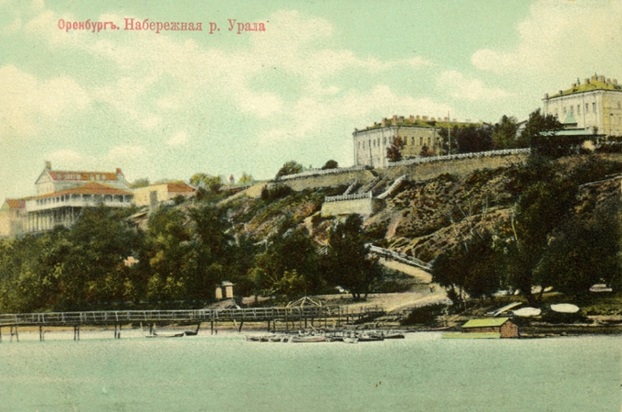
Table 3 — Report on the activity of the Orenburg Municipal Bank for 1866, rubles
| Total turnover of receipts and expenditures made by the bank | 690 967,00 |
|---|---|
| receipts | 344 320,36 ½ |
| expenditures | 346 646,90 ¼ |
| Cash remaining | 4 907,00 |
| 1. Bank’s own capital | |
| main capital at the establishment of the bank | 50 000,00 |
| allocated from the distribution of net profit for 1865 | |
| to main capital | 3 000,00 |
| to reserve capital | 3 100,00 |
| as of 1 January 1867 | 56 100,00 |
| main capital | 53 000,00 |
| reserve capital | 3 100,00 |
| 2. Charitable capital or capital with a specific purpose | |
| charitable capital held by 1866 | 1 643,00 |
| new donations received in 1866 | 105 |
| 3. Transactions | |
| a) Interest-bearing deposits | |
| held on 1 January 1866 | 135 299,46 |
| received during the year | 114 907,95 |
| deposits withdrawn | 24 349,17 |
| remaining in the bank with accrued interest | 128 014,24 |
| b) Deposits for safekeeping | |
| Received | 5 900,00 |
| Withdrawn by depositors | 1 900,00 |
| Remaining with the bank | 4 000,00 |
| c) Discounting of bills and term securities | |
| Loans issued against collateral | 232 214,00 |
| Redeemed/marked off | 31 080,00 |
| На основании ст. 120 Положения 20% от годовой прибыли к запасному капиталу | 2 000,00 |
| Представляется на усмотрение Городского общества | 8 481,6½ |
Source: File on the organization of the public bank in Orenburg. State Budgetary Institution “Consolidated State Archive of the Orenburg Region” (GBU “OGAOO”). Fonds 41. Inventory 1. File 1120.
The reports for subsequent years make it possible to compare the scale of the Orenburg bank with other local credit institutions. By the end of the 1880s the Orenburg Municipal Public Bank had become a significant institution for the city economy. It accumulated deposits, maintained cash balances, issued loans secured by movable and immovable property, discounted bills and held interest-bearing securities.
Table 4 — Balance of the Orenburg Municipal Bank as of 1 January 1888, rubles
| ASSETS | in rubles | LIABILITIES | in rubles |
|---|---|---|---|
| I. Cash desk | 157 762,83 ¼ | I. Capital | |
| II. Current accounts at the State Bank branch | 123 544,49 | main | 230 376,00 |
| III. Interest-bearing securities of reserve capital | 50 114,70 | reserve capital in interest-bearing securities | 50 197,99 |
| IV. Reserve capital funds in cash | 83,29 | III. Perpetual deposits | 43 294,00 |
| V. Discounted bills | 1 297 685,58 | IV. Deposits | |
| VI. Loans against movable collateral | 19 827,00 | fixed-term | 1 105 773,00 |
| VII. Loans against real estate collateral | 135 790,81 | demand deposits | 288 756,00 |
| VIII. Doubtful debts | 45 082,40 | ordinary current account | 3 357,03 |
| IX. Furnishings and equipment | 2 152,60 | VII. Interest payable on deposits | 33 549,29 |
| X. Гербовый сбор | 60,9 | Проценты и комиссии полученные за текущий год | 46 911,47 |
| XI. Расходы подлежащие возврату | 2 375,88 | Прибыли | 27 183,81 |
| XII. Текущие расходы по содержанию банка | 471 | Переходящие суммы | 1 762,79 |
| VI. Ссуды городу и земству | Государственный 5% сбор с доходных денежных капиталов | 3 790,10 | |
| ИТОГО | 1 834 951,48 | ИТОГО | 1 834 951,48 |
Source: Orenburg Provincial Gazette, 1888, Nos. 43–53. Orenburg: Printing House of the Provincial Board, 1888. Holding institution: GBU “Consolidated State Archive of the Orenburg Region”. Electronic version prepared by the N. K. Krupskaya Orenburg Regional Universal Scientific Library.
For comparison, the balance of the Orenburg Mutual Credit Society shows a different institutional form and a different structure of liabilities. Both institutions served local credit needs, but the municipal bank remained more closely connected with the city, its public funds and the functions of local self-government.
Table 5 — Balance of the Orenburg Mutual Credit Society, rubles
| ASSETS | in rubles | LIABILITIES | in rubles |
|---|---|---|---|
| I. Cash desk | 25 862,28 | I. Capital consisting of contributions | 114 290,00 |
| II. Current accounts | II. Reserve capital | 23 433,31 | |
| at the State Bank branch | 3 024,46 | III. Reserve fund | 31 424,01 |
| Orenburg branch of the Volga-Kama Commercial Bank | 32 342,63 | IV. Deposits | |
| III. Discounting of bills | current accounts | 217 455,75 | |
| in the Society’s portfolio | 692 521,48 | fixed-term | |
| at the Orenburg branch of the State Bank | from Society members | 220 900,00 | |
| on commission | 16 205,82 | from outside persons | 281 448,00 |
| rediscounted | 52 197,00 | demand deposits | 23 012,00 |
| в обеспечении спец. текущего счета | 50 000,00 | V. Переучтенные векселя | 52 197,00 |
| IV. Ссуды под залог | 82 296,00 | VII. Невыплаченный дивиденд | 7 046,22 |
| V. Процентные бумаги запасного и резервного капитала | 54 700,00 | VIII. Проценты подлежащие уплате | 19 713,02 |
| VI. Протестованные векселя | 20 370,96 | IX. Полученные проценты и комиссии | 49 941,98 |
| VII. Текущие расходы общества | 13 336,38 | X. Переходящие суммы | 6 155,50 |
| VIII. Расходы подлежащие возврату | 3 244,04 | XI. Государственный 5% сбор | 792,87 |
| IX. Furnishings and equipment | 1 708,61 | XII. Счёт прибылей | |
| Всего активов | 1 047 809,66 | Всего пассивов | 1 047 809,66 |
Source: V. P. Semyonov, “Russia. A Complete Geographical Description of Our Fatherland,” vol. 18: Kirghiz Territory, 1903, pp. 324–325.
The balance of the Orenburg Municipal Public Bank as of 1 January 1890 shows that the institution had preserved a substantial role in local credit. Its assets included cash, current accounts at the State Bank, securities of reserve capital, discounted bills, loans secured by movable and immovable collateral and doubtful debts. Its liabilities included main and reserve capital, perpetual deposits, fixed-term and demand deposits and interest payable on deposits.
Table 6 — Balance of the Orenburg Municipal Bank as of 1 January 1890, rubles
| ASSETS | in rubles | LIABILITIES | in rubles |
|---|---|---|---|
| I. Cash desk | 149 517,98 | I. Capital | |
| II. Current accounts at the State Bank branch | 135 000,00 | main | 248 686,60 |
| III. Interest-bearing securities of reserve capital | 53 765,39 | reserve capital in interest-bearing securities | 53 804,67 |
| IV. Reserve capital funds in cash | 39,28 | III. Perpetual deposits | 43 294,00 |
| V. Discounted bills | 973 883,25 | III. Вклады | |
| VI. Loans against movable collateral | 17 223,00 | fixed-term | 888 788,00 |
| VII. Loans against real estate collateral | 112 458,80 | demand deposits | 133 794,00 |
| VIII. Doubtful debts | 41 314,39 | ordinary current account | 19 440,43 |
| IX. Furnishings and equipment | 79,05 | IV. Interest payable on deposits | 31 390,21 |
| X. Гербовый сбор | 1 947,38 | I. Проценты и комиссии полученные за текущий год | 51 264,01 |
| XI. Расходы подлежащие возврату | 2 122,46 | VIII. Прибыли | 26 532,69 |
| XII. Текущие расходы по содержанию банка | 13 215,14 | VIII. Переходящие суммы | 3 045,84 |
| Проценты по текущему счёту в ООГБ | 871,61 | IX. Государственный 5% сбор с доходных денежных капиталов | 1 397,38 |
| Всего активов | 1 501 437,83 | Всего пассивов | 1 501 437,83 |
Source: Orenburg Provincial Gazette, 1890. Holding institution: GBU “Consolidated State Archive of the Orenburg Region”.
The bank’s profit was used not only for strengthening capital, but also for urban needs. The municipal public bank financed city improvement, charity and social infrastructure. In this respect, the Orenburg bank differed from ordinary commercial banks: its economic activity was linked to the needs of the city and its population.
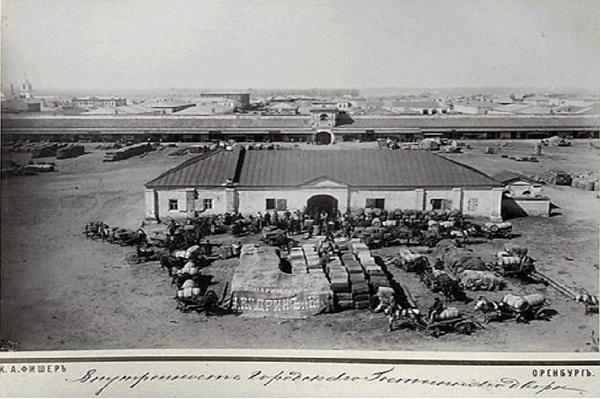
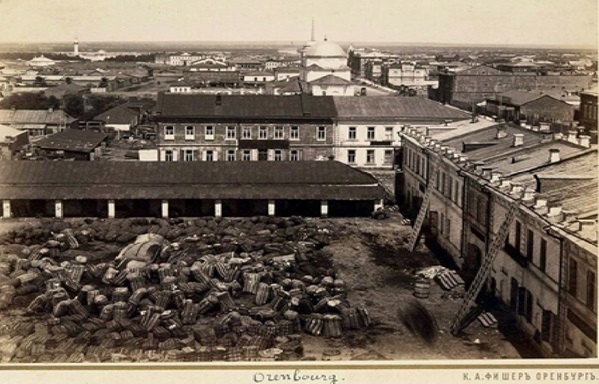
The location of the bank was also symbolic. At the end of the nineteenth century the Orenburg Municipal Public Bank was located in Gostiny Dvor, one of the central spaces of urban trade. This reflected the close connection between the bank, the merchant environment and the everyday circulation of goods and money in the city.
By the 1880s, municipal public banks had become a serious part of the credit system of the Russian Empire. The government, taking into account the negative experience of bank crises, increasingly raised the question of improving supervision. The diversity of approaches to the formation of bank capital created risks of abuse and unintentional errors. The Regulation of 1883 assigned the Ministry of Finance a broader role not only in guiding municipal banks, but also in supervising them.
In August and December 1883, detailed circulars were issued to explain the application of the new regulation. Deadlines were established for bringing various bank transactions into conformity with the rules; the procedure for submitting reports to government institutions was defined; and a new form for monthly bank balances was introduced. In October of the same year, instructions were approved for inspections of municipal banks by persons appointed by the government. In January 1884, instructions were approved for commissions elected by city dumas to verify annual reports.
Government supervision was supplemented by independent oversight by the State Bank of the Russian Empire. This was important because the State Bank needed to determine the amount of credit that could be provided to a particular institution. Information was supplied by branch managers who knew the local financial situation and could assess a bank not only from its reports.
Provincial authorities also supervised municipal banks. The governor had to examine annual reports before forwarding them to ministries and, if necessary, point out errors to city dumas. The governor also approved the board elected by the duma; this approval was not merely formal and could involve the gendarmerie administration and district police authorities.
Of particular interest for modern practice is the reporting procedure fixed in the Normal Regulation on Municipal Public Banks of 1883. The bank board had to submit an annual report no later than 1 March. The report was submitted through the city board to the City Duma, which elected an audit commission by secret ballot. This commission had to check the report against original books and documents within a fixed period. Such a procedure created a direct public link between the bank, municipal self-government and the city community.
The experience of the Orenburg bank is therefore important not only as a local historical case, but also as an example of how a credit institution created from city funds could be accountable to municipal authorities. In modern practice it is difficult to find examples where banks that call themselves municipal or provincial report in a real and substantive way to the legislative authorities of a region.
With the introduction of new legal norms, the status and functions of municipal public banks changed. State regulation gradually transformed these institutions into more centralized and formalized structures. Instead of remaining purely local institutions oriented toward public benefit, they began to perform functions typical of state credit institutions. This transformation responded to the needs of a growing economy and to the demand for a more stable and governable banking system.
This process had positive aspects. State regulation strengthened control over banks and improved their reliability. Integration into the national financial system created opportunities to expand services and improve their quality. Municipal banks could provide loans, discount bills and conduct more complex financial transactions, including transactions with securities and collateralized lending.
At the same time, the loss of the original public character of these banks caused dissatisfaction among their traditional clients and supporters. Critics argued that the banks became less oriented toward the immediate needs of the local population. Instead of functioning as instruments of social support and local economic development, they increasingly acted in the interests of broader state objectives.
The transformation of municipal public banks into state-regulated credit institutions reflected broader tendencies in the development of Russia’s financial system. It formed part of a general movement toward centralization and formalization of economic institutions. The changes raised the question of the balance between state regulation and local autonomy: should banks act primarily in the interests of the state, or should they take into account the specific needs of local communities?
The first decades of municipal public banks show that their main feature was a close economic connection with the city and urban economy. This connection was the foundation of their activity. The bank’s relation to the city through its founding body, and to the city’s residents through its client base, determined its status. The source of capital became the basic characteristic of a local bank.
The essential feature of the pre-revolutionary municipal bank was that, even when its capital was originally formed from donations or public funds, the bank belonged to the city community. As city authorities saw how successful such banks could be, they themselves began to establish them. Management was exercised by the City Duma, which elected the director and two assistants, usually respected merchants.
At the same time, the City Duma could not dispose freely of the bank’s funds. These funds consisted of depositors’ money, which had to be returned, and the bank’s own capital, which secured those deposits. Legislators therefore separated the city budget from the bank’s cash desk. The bank was liable for its obligations, including deposits, with all its capital and property, while the city could additionally guarantee deposits only under special conditions.
By the end of the nineteenth century, it had become clear that economic development required diverse forms of credit institutions. After the closure of earlier state banking institutions, Russia was left with few credit institutions, and municipal public banks were among the first to support agriculture and industry with relatively cheap and accessible credit. They penetrated remote parts of Russia and enlivened local economic life.
However, while creating the prerequisites for private banking, the state did not give municipal public banks full economic freedom and left them under the jurisdiction of cities. The absence of a clear legislative definition of their goals in the first regulations allowed different interpretations: support for trade and industry, extraction of profit to strengthen the resources of cities and zemstvos, and the provision of credit for local needs.
Municipal public banks were therefore a compromise between the shortage of private initiative in Russia and the government’s need to create and support new forms of credit institutions. Contemporary authors noted that banking policy developed mainly by government initiative, often cautiously, inconsistently and without a clear plan. The state encouraged private credit institutions, but at the same time preserved the predominance of state and public forms of banking.
The spread of public banks was also part of an attempt to revive provincial trade and industry by adapting foreign experience to Russian conditions. In developed countries, public or municipal credit institutions had already proved useful for local business. Russian authorities sought to use this experience, but within a system where state support and control remained decisive.
Despite their shortcomings, municipal public banks made a significant contribution to the Russian economy. They attracted additional resources for local projects, improved access to credit for entrepreneurs and supported urban infrastructure. In conditions of limited state banking capacity and economic difficulty, they became an important instrument for local growth and modernization.
The creation of public banks in the provinces can therefore be viewed as an important step toward economic modernization and greater financial independence of regions. The initiators of the Orenburg bank needed accessible and relatively long-term credit for urban infrastructure, local projects and the townspeople. They also sought to strengthen local self-government and create new sources of financing.
The main motives for establishing the Orenburg bank were financial support for the urban economy and social infrastructure, a greater degree of municipal financial independence, support for local industry and trade, and improvement of the quality of life through social projects and lending to citizens. The extent to which the Orenburg bank achieved these goals is considered further in Chapter 5.